Acanthus ilicifolius L.
| Etymology | Genus | From Greek kantha (thorn); also spine or spike |
|---|---|---|
| Species | Having leaves like a Holly | |
| Family | Acanthaceae | |
| Synonyms | - | |
| Common Names | Sea Holly | |
| Status | Native: Least Concern | |
| Form | Herb | |
| Native Distribution | India to southern China, Southeast Asia, tropical Australia and the western Pacific islands | |
Diagnostics
A true mangrove species which exist as a sprawling herb of up to 2m. The leaves are variable and the margins can be either entire or lobed with spines. Like all members in this genus, it can secrete salt from the leaves. It can be separated from its other two congeners from in Singapore from its purple inflorescence (though rarely it can appear white).
Interesting Facts
The pounded fruit of Acanthus ilicifolius is used as a blood purifier and applied as a dressing for burns. The leaves are eaten to relieve rheumatism (Giesen et al., 2006).
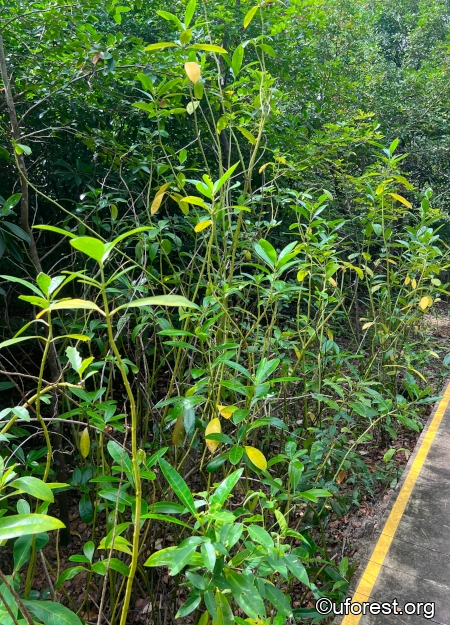
Sea Holly along Pasir Ris Mangrove boardwalk, 2026.
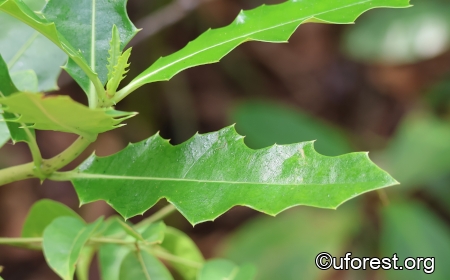
Spiny, Holly-like leaves.
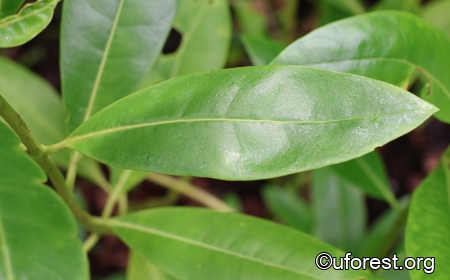
Variation with simple leaves.
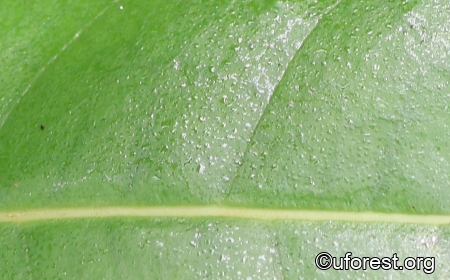
Salt secretion.
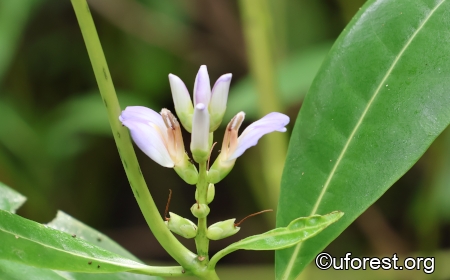
Purple flowers.
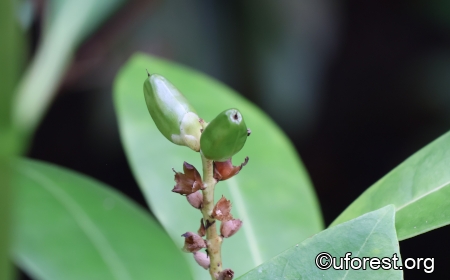
Fruits.
References
Giesen W, Wulffraat S, Zieren M & Scholten L (2006) Mangrove guidebook for Southeast Asia. RAP Publication 2006/07. FAO Regional Office for Asia and the Pacific and Wetlands International. Bangkok. 769 pp.