Barringtonia asiatica (L.) Kurtz
| Etymology | Genus | After Daines Barrington, a 18th century English judge and naturalist |
|---|---|---|
| Species | From Asia | |
| Family | Lecythidaceae | |
| Synonyms | - | |
| Common Names | Fish Poison Tree, Putat Laut | |
| Status | Native: Critically Endangered | |
| Form | Tree | |
| Native Distribution | Tanzania, Indian Ocean, India, Southeast Asia, Australia, West Pacific | |
Diagnostics
Tree of up to 20m. It is not difficult to identify from its large leaves arranged in a rosette that clustered at the terminal of branches. The branches are straggly and create a bushy foliage. It is found at various coastal habitats, including beach forests, mangroves and rocky cliffs.
Interesting Facts
The showy flowers which emit a strong sweet scent bloom at night and are pollinated by moths and bats. The seeds of the tree contain saponins, and is used traditionally by fishermen as fish poison to to stun the fish (Giesen et al., 2006).
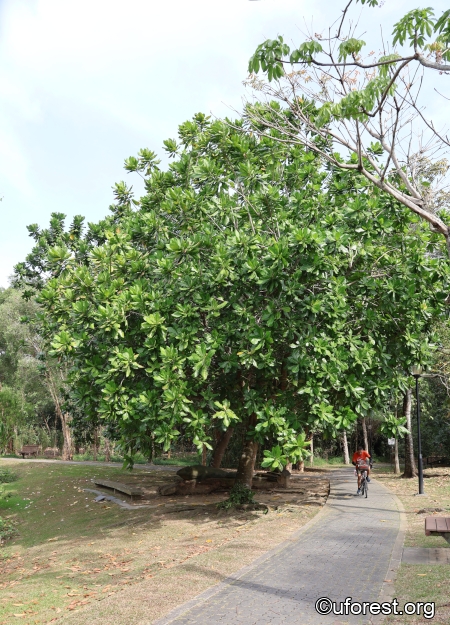
A cultivated stand at Pasir Ris Park.
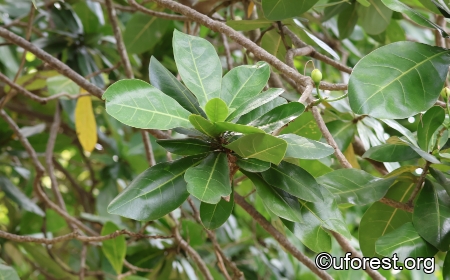
Leaf cluster.
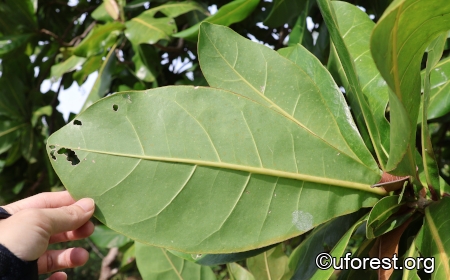
Leaf underside.
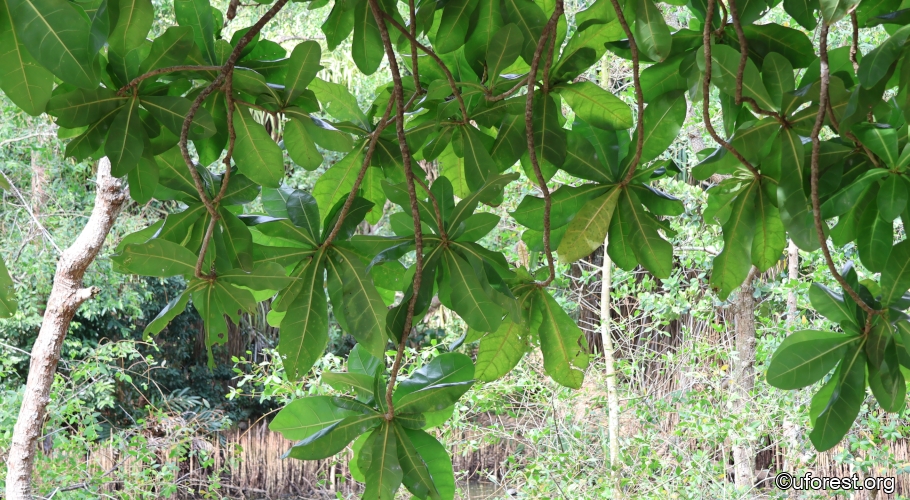
Straggly branches.
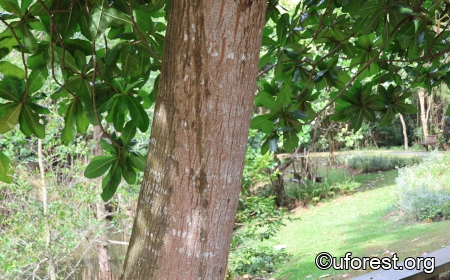
Bark.
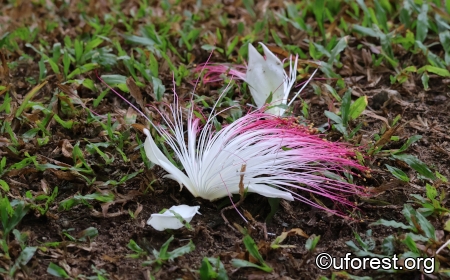
Fallen flower.
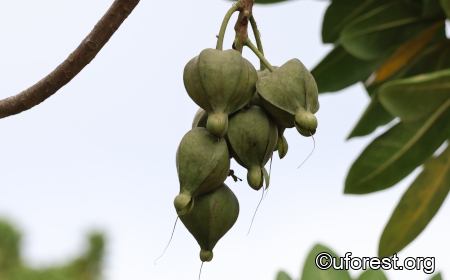
Fruits.
References
Giesen W, Wulffraat S, Zieren M & Scholten L (2006) Mangrove guidebook for Southeast Asia. RAP Publication 2006/07. FAO Regional Office for Asia and the Pacific and Wetlands International. Bangkok. 769 pp.