Cleome rutidosperma DC.
| Etymology | Genus | Given by Theophrastus, successor of Aristotle. Reference to plant unknown. |
|---|---|---|
| Species | Unknown | |
| Family | Cleomaceae | |
| Synonyms | Cleome ciliata Schumach. & Thonn., Cleome rytidosperma DC. ex Schult. f. | |
| Common Names | Purple Cleome, Fringed Spiderflower | |
| Status | Exotic: Naturalised | |
| Form | Herb | |
| Native Distribution | Tropical Africa | |
Diagnostics
Cleome rutidosperma is a very common weed of lawns. The key is to watch out for its trifoliate leaves. Each leaflet is somewhat diamond-shaped with no stalk. The flowers are very small (about 15mm across) with upward pointing purple petals and protruding stamens and pistils.
Interesting Facts
The Purple Cleome is naturalised throughout the tropics (eFlora, 2008). While tasting bitter, the leaves are eaten as a vegetable (Jansen, 2004).
In Malaysia, planting of this weedy herb around crop-fields helps to divert pest caterpillars of the diamondback moth (Plutella xylostella) such that the eggs are laid on the Purple Cleome instead (Jansen, 2004).

Purple Cleome is a short herb commonly on lawns.
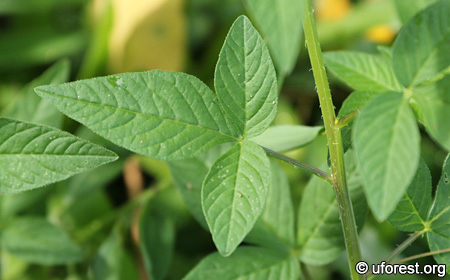
Trifoliate leaves. Each leaflet does not have a stalk.

The purple flower up close.

Fruit is long and capsular.
References
eFloras (2008) Cleome rutidosperma Candolle. Flora of China. Missouri Botanical Garden, St. Louis, MO & Harvard University Herbaria, Cambridge. http://www.efloras.org/. Accessed on 22-Mar-2013.Jansen PCM. (2004) Cleome rutidosperma DC. In: Grubben GJH & OA Denton (Eds). PROTA 2: Vegetables/Legumes. [CD-Rom]. PROTA, Wageningen, Netherlands.