Excoecaria agallocha L.
| Etymology | Genus | From Latin ex-caeco (to blind, make blind) |
|---|---|---|
| Species | Latinized from an ancient word for a resinous, aromatic tree | |
| Family | Euphorbiaceae | |
| Synonyms | - | |
| Common Names | Buta-Buta, Blind-your-eye | |
| Status | Native: Least Concern | |
| Form | Tree | |
| Native Distribution | India and Sri Lanka throughout Southeast Asia, to southern China, Taiwan, Southern Japan, Australia and the west Pacific | |
Diagnostics
Small tree of up to 10m, and found at the landward side of the mangrove. The leaves margins are mildly serated and the petiole is grooved. It is deciduous, and will turn orange and red before shedding. Copious white sap is present in the leaves, branches and trunk.
Interesting Facts
The nymph of the Mangrove shield bugs (Calliphara nobilis) feed on the developing seeds of this tree. The white sap is poisonous and can cause blisters and temporary blindness, hence its common name.
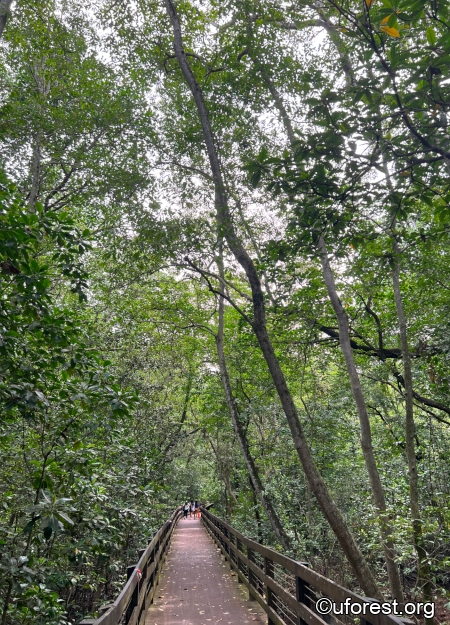
Trees on the right at Pasir Ris Mangrove, 2026.
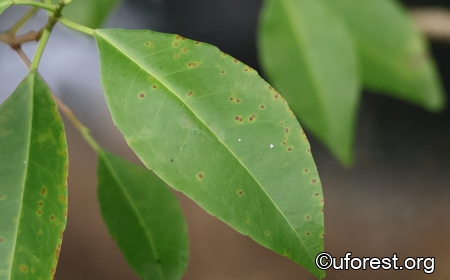
Leaf, note serrated margins and grooved petiole.
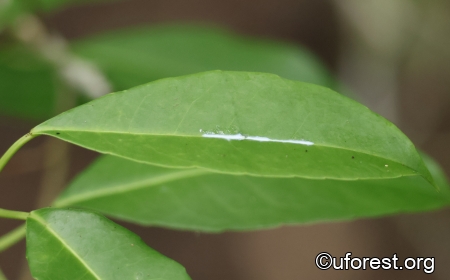
White sap after breaking leaf.
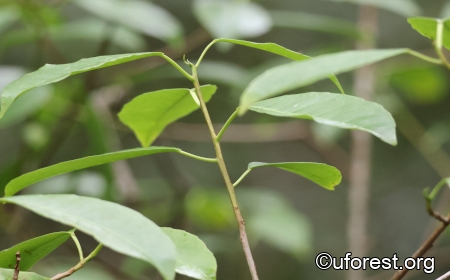
Leaf angle with a slight bent from the petiole.
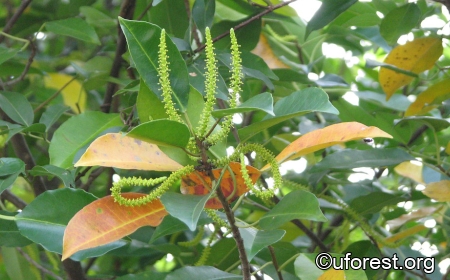
Inflorescence, as well as surrounding brown leaves.
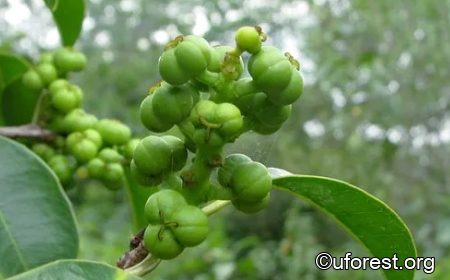
Fruits.
References
Giesen W, Wulffraat S, Zieren M & Scholten L (2006) Mangrove guidebook for Southeast Asia. RAP Publication 2006/07. FAO Regional Office for Asia and the Pacific and Wetlands International. Bangkok. 769 pp.