Ficus apiocarpa Miq.
| Etymology | Genus | From the Latin name for the fig (Ficus species) |
|---|---|---|
| Species | Pear (apio) fruit (carpa); referring to the pear-shaped fruit | |
| Family | Moraceae | |
| Synonyms | Ficus apiocarpa var. villosa Corner, Ficus tetangis Miq. | |
| Common Names | Pear-shaped Fig | |
| Status | Native: Endangered | |
| Form | Woody Climber | |
| Native Distribution | Thailand, Sumatra, Peninsular Malaysia, Singapore, north Borneo | |
Diagnostics
Ficus apiocarpa is a woody climber that also commonly scrambles along the forest floor. The leaves can grow to about 20cm, with some slight variation in shape (being elliptic, subobovate, or subovate), and having a small drip-tip.
Interesting Facts
Ng et al. (2005) recorded their presence in the Botanic Gardens Jungle and the Central Catchment Nature Reserve. However, I have observed widespread growth of them in a small patch of young secondary forest (abandoned plantation) next to Dover MRT station; unusual due to its uncommon status.
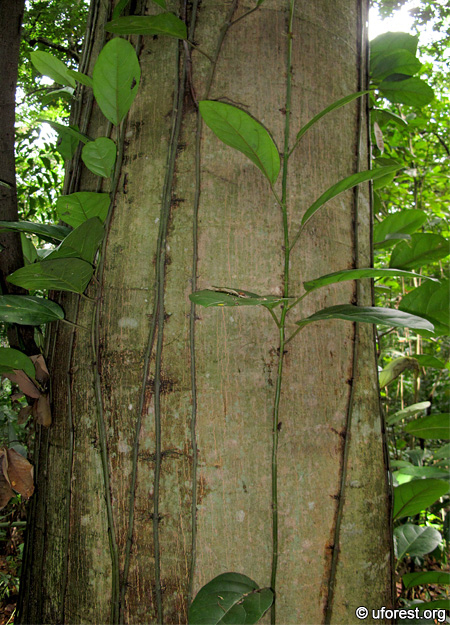
Climbing habit of the Pear-shaped Fig in a young secondary forest.
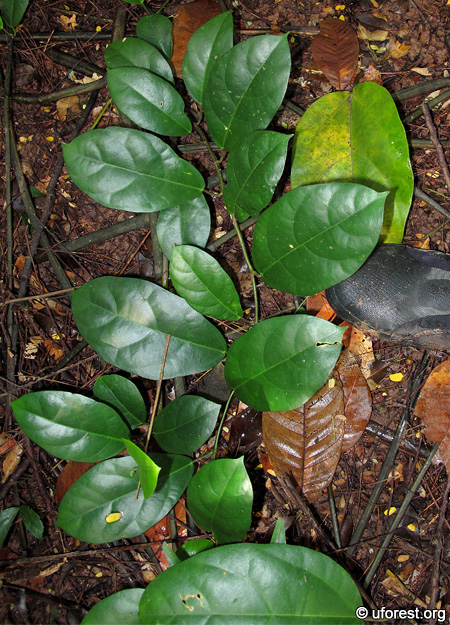
The fig also scrambles along the forest floor.
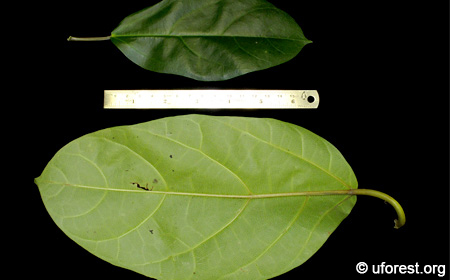
Variable size and shape of the leaves. Elliptic (top) subobovate (below).

Close-up of the netted venation.

The woody stem.

The pear-shaped figs.