Heritiera littoralis Aiton
| Etymology | Genus | After Charles Louis de Brutelle L'Heritier, a 19th century French botanist |
|---|---|---|
| Species | Found along the shore | |
| Family | Malvaceae | |
| Synonyms | - | |
| Common Names | Dungun, Dungun Laut | |
| Status | Native: Endangered | |
| Form | Tree | |
| Native Distribution | East Africa and Madagascar to Southern China, Southeast Asia, Australia and the Pacific | |
Diagnostics
A true mangrove tree that is found at the landward side of the habitat, and can grow up to 25m. The leaves are stiff, and can be easily identified from the dark green upper side, and greyish green/bronze lower side. The woody, buoyant fruits has a keel running at one side of the horizontal axis, which acts as a sail for disperal.
Interesting Facts
The wood is heavy and durable, and is used for "canoes, house posts, telegraph poles and masts, wharf decking, and boat planking" (Giesen et al., 2006).
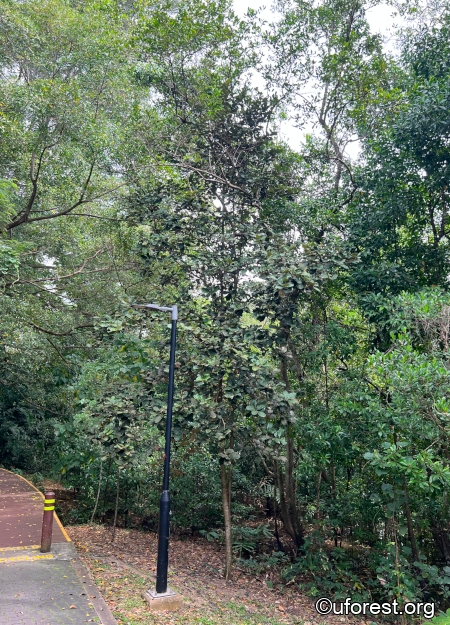
Cultivated tree at Pasir Ris Park, 2026.
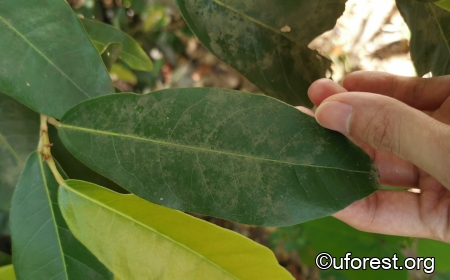
Young leaf.
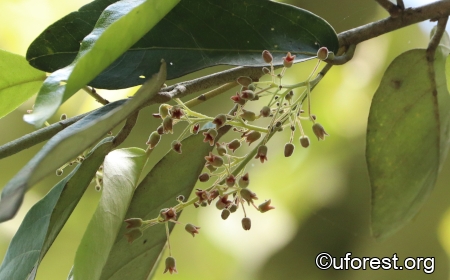
Inflorescence.
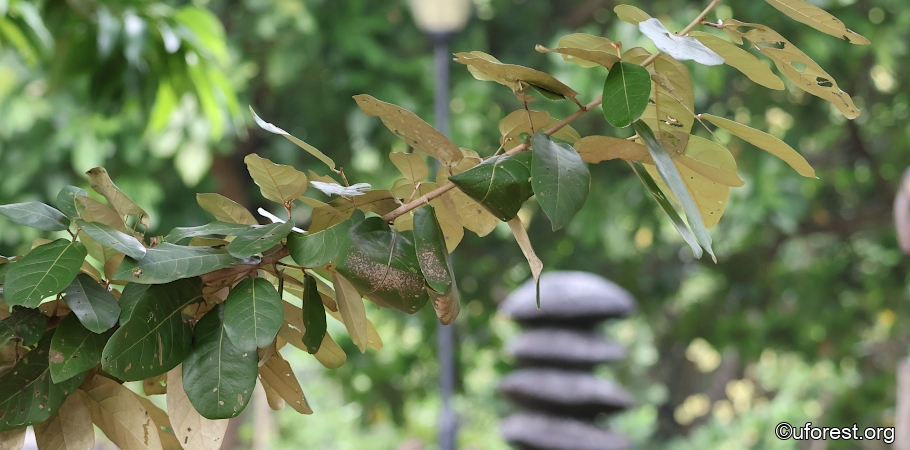
Branch. Note the bronze colour of the leaf undersides.
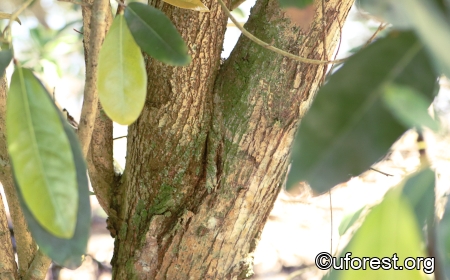
Stem.
References
Giesen W, Wulffraat S, Zieren M & Scholten L (2006) Mangrove guidebook for Southeast Asia. RAP Publication 2006/07. FAO Regional Office for Asia and the Pacific and Wetlands International. Bangkok. 769 pp.