Mangifera foetida Lour.
| Etymology | Genus | Mango-bearing |
|---|---|---|
| Species | Foetid; after the strong smelling fruit | |
| Family | Anacardiaceae | |
| Synonyms | - | |
| Common Names | Horse Mango, Bachang | |
| Status | Native: Critically Endangered | |
| Form | Tree | |
| Native Distribution | West Malesia | |
Diagnostics
Mangifera foetida can be identified from the glossy and leathery leaves, which have obvious depressed secondary venation. Corner (1997) also described that the stiff and thick cardboard-like leaves, copper-red inflorescences with pink flowers, and stinking fruits are also identifying features of this mango species.
Interesting Facts
According to Corner, this is regarded as the most beautiful mango tree in flower because of the colour. The sweet variety of the fruits are eaten raw, while the wilder ones can be used in curries or for pickles.
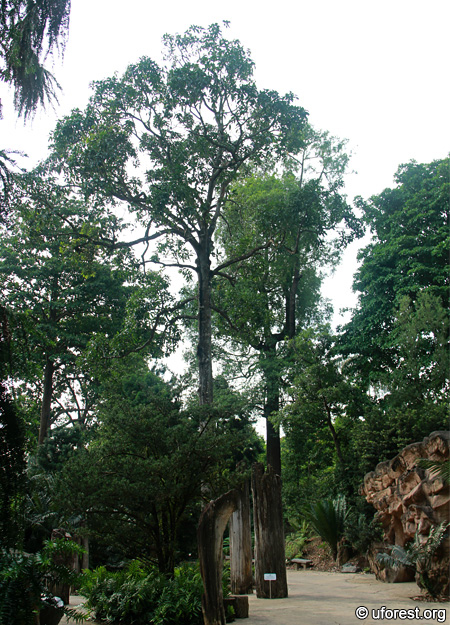
A tall Horse Mango in the Evolution Garden of the Botanic Gardens.

A fruiting individual in the rainforest of the Botanic Gardens.

Leaf cluster. Note the glossy surface and depressed veins.

Trunk.
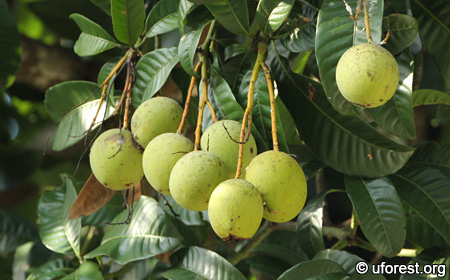
Fruits.
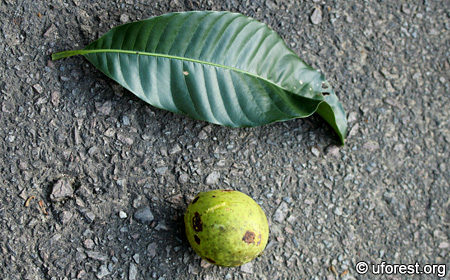
The fruit and leaf for size comparison.