Senna alata (L.) Roxb.
| Etymology | Genus | From the Arabic name Sana |
|---|---|---|
| Species | Winged; referring to the winged fruits | |
| Family | Fabaceae | |
| Synonyms | Cassia alata L., Cassia bracteata L.f. | |
| Common Names | Seven Golden Candlesticks, Ringworm Tree | |
| Status | Exotic: Naturalised | |
| Form | Shrub | |
| Native Distribution | Northern part of South America | |
Diagnostics
Senna alata is a shrub that can be found growing wild in our scrublands. Its erect and flaming yellow-orange inflorescence makes it easy to identify. The leaflets are also rather diagnostic, being large and almost rectangular.
Interesting Facts
The Seven Golden Candlesticks is one of the first few plants that I learnt, and I remembered asking "what's with the seven"? Apparently, this name originated from the Bible in the Old Testament when God instructed Moses to make a golden lampstand with 6 branches (adding to a total of 7) to be placed in the holy tentage for worshipping him (Exodus 25: 31-40).
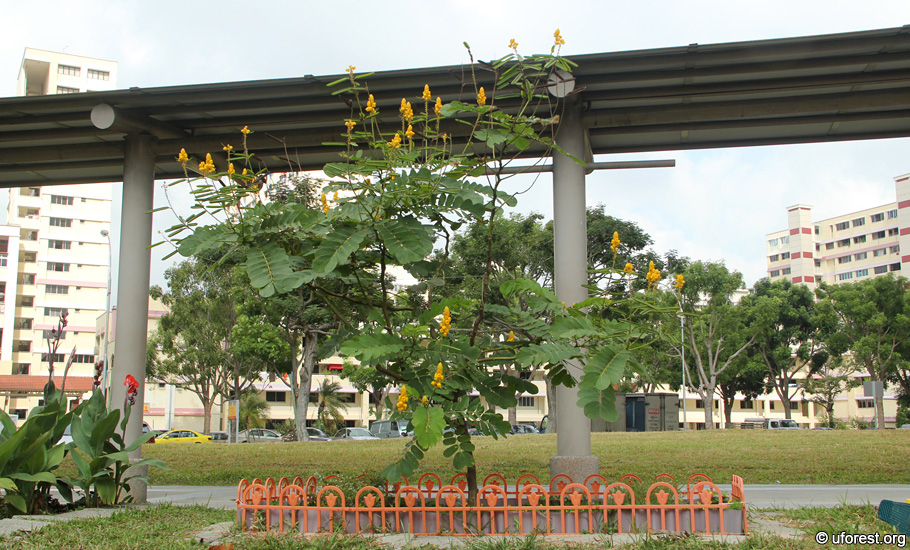
Form of the Seven Golden Candlesticks.
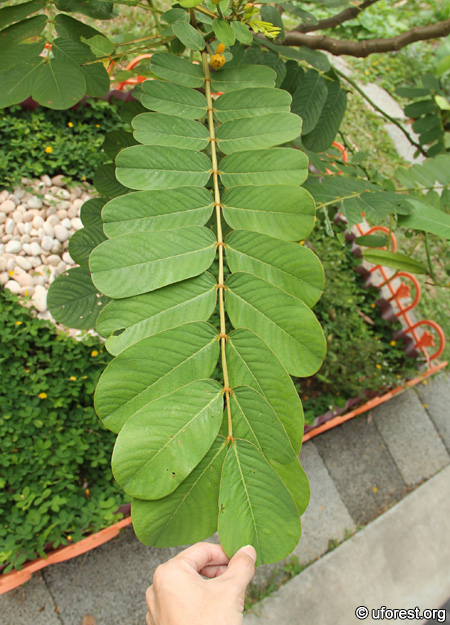
Compound leaf.

Inflorescence with developing fruits.

Close-up of a leaflet.
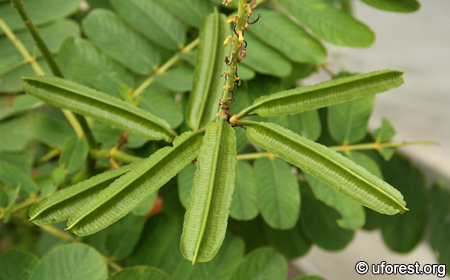
Fruits are 4-winged.
Siyang ·
2014-02-16 / Modified: 2017-12-25