Ticanto crista (L.) R.Clark & Gagnon
| Etymology | Genus | - |
|---|---|---|
| Species | Crested; perhaps referring to the fruits | |
| Family | Fabaceae | |
| Synonyms | Caesalpinia crista L. | |
| Common Names | Prickly Mangrove Climber, Kuku Tupai, Bonduc, Akar Kelinci, Kaniker | |
| Status | Native: Least Concern | |
| Form | Climber | |
| Native Distribution | India and Sri Lanka, through Southeast Asia, to Australia and New Caledonia | |
Diagnostics
A mangrove woody climber that have bipinnate leaves. The branches, mid rib of the compound leaves may be lined sparingly with prickles. The small leaflets are oppositely arranged and comes in 2-6 pairs. The inflorescences are flush yellow. The fruits are flat and may be prickly, ending with a sharp beak. It becomes black when ripe.
Interesting Facts
From Giesen (2006), the seeds are used as marbles for play, and also used for treatment of malaria and parasitic worms. The leaves, on the other hand, is said to use to treat Hepatitis A.
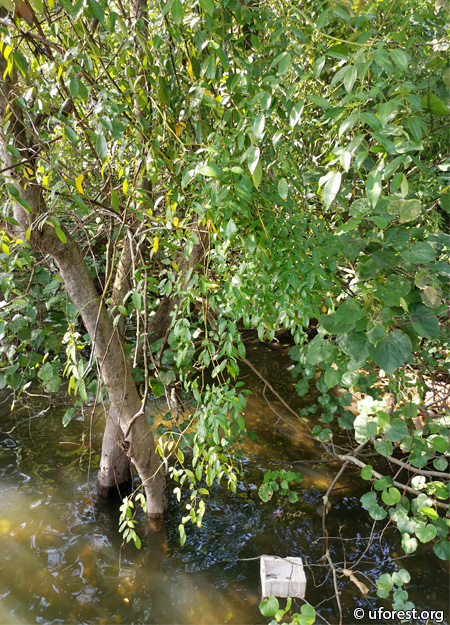
Sprawling climber over the mangroves in Sungei Buloh Wetland Reserve (2020).
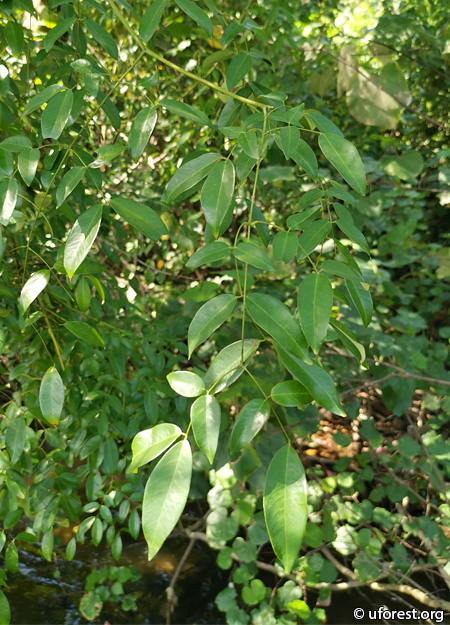
Compound leaves.
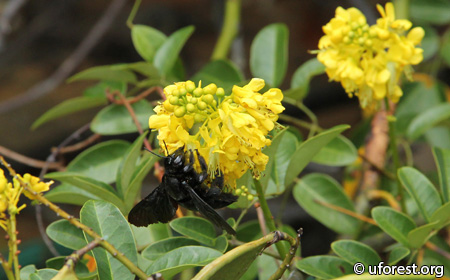
Flowers at Jenal Jetty (2011).
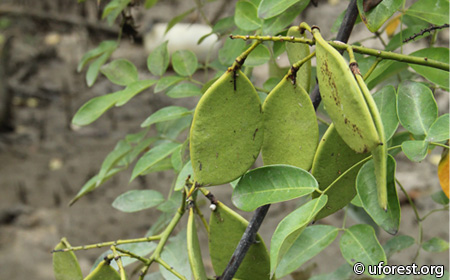
Fruits.
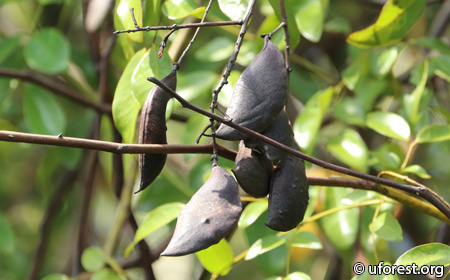
Ripe black fruits.
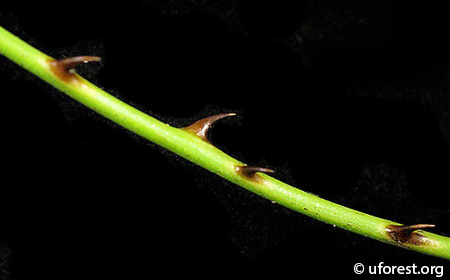
Recurved prickles.
References
Giesen W, Wulffraat S, Zieren M & Scholten L (2006) Mangrove guidebook for Southeast Asia. RAP Publication 2006/07. FAO Regional Office for Asia and the Pacific and Wetlands International. Bangkok. 769 pp.